Featured
Table of Contents
Learn More About Trees
Thatch is a layer of undecomposed organic matter that constructs up in between the soil surface area and the actively growing green vegetation. A thatch layer will develop if raw material is produced faster than it is broken down. Soil core sample showing place of thatch layer listed below turfgrass canopy. Contrary to common belief, leaving clippings on the lawn does not contribute to increased thatch.

Long clippings might include wiry stem material that is slower to decay, but are still not considerable factors to thatch buildup. Energetic grass varieties Extreme nitrogen fertilization Infrequent trimming Low soil oxygen levels (found in compressed or water logged soils) See How to control thatch.
Turf clippings are the cut yards that are left behindor recorded in a turf catcherby your mower when you cut your yard. Yard clippings are brief when you mow your lawn following the "one-third" rule (never cut more than one-third height off of your lawn in a single mowing session).
As long as you are following the "one-third" rule for cutting frequency, the brief yard clippings left behind will easily filter through your yard down to the soil, where they'll rapidly decompose. Likewise called "grasscycling," leaving clippings on your lawn will help your soil end up being more rich and fertile. Problems with grasscycling usually arise when lawns are infrequently mowed, leaving clippings that are too long.
In these instances where you can still see lawn clippings on the lawn, you have a couple of choices: Either cut the lawn again to cut the clippings down to size, rake and bag the clippings, or use a yard catcher on your mower. Whenever possible, you ought to constantly return lawn clippings to your yard.
Return clippings to the yard for at least 2 cutting sessions following application. Grasscyclingdoesn't add to thatch buildup. Thatch is generally made up of turf grass roots, crowns, roots and stolons that haven't decayed. These plant parts disintegrate slowly, whereas yard clippings decay quickly.
If you've got a lawn, it needs to be cut. Basic as that. However did you understand you can put your grass clippings to work? If you use them right, they can conserve you money and time while also creating a healthier lawn. Plus, it's extremely easy to do! So, if you've been wondering what to do with yard clippings after mowing, wonder say goodbye to! You want to compost them.
Composting turf clippings is the very best! You essentially do absolutely nothing. Honestly, it's as easy as leaving the clippings on your yard after cutting instead of hooking up a bag. And doing this keeps your yard healthier. Just check out these stats! When lawn clippings break down, the yard absorbs all those nutrients, like nitrogen, phosphorous and potassium.
Read More About Flowers
You'll conserve up to 35 minutes each time you mow. Over the course of the season, you'll invest 7 hours less doing backyard work, according to a Texas A & M research study. Great!. Did you know yard trimmings comprise almost 20 percent of our strong waste? You'll feel great recycling and reusing instead of trashing your grass.
So, recycle your lawn with confidence. Or if you want to bag and garden compost your grass clippings, that works, too! Strategy to mow dry lawn with a sharp blade, and never remove more than one-third of the grass height simultaneously. Cut lawn to its ideal height, which is 3 inches for cool-season turfs and 2 inches for warm season lawns.
Even though you'll do this more, you'll spend as much as 38 percent less time during each cut, according to the University of Idaho. So, overall, this works in your favor! Leave the turf clippings on the lawn. That's it! But if you see the clippings collecting in stacks, rake 'em out, so they can break down quicker.
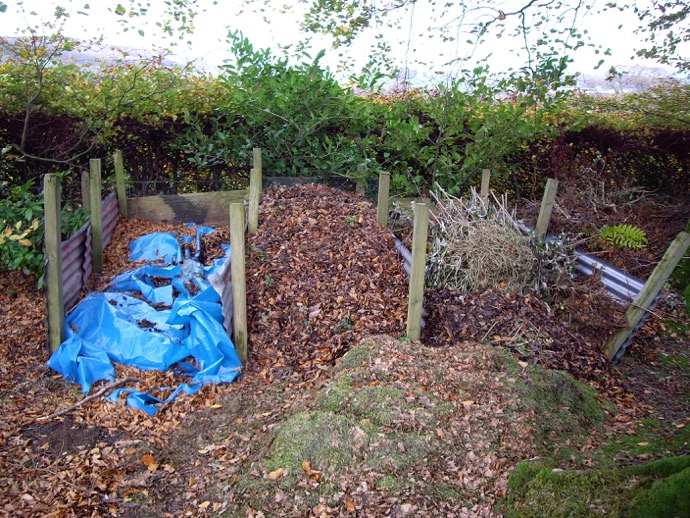
Include dry grass that hasn't been treated in the last 2 week to your compost stack. For the correct 30:1 carbon to nitrogen ratio, mix about 50% turf clippings and 50% brown material, like brown leaves, branches or newspaper. If you permit yard to disintegrate on your lawn, it'll be gone quickly, generally within a few weeks.
To compost grass in the yard quicker, cut every five days! If you're composting lawn in a pile, get the ratio right, turn your stack weekly and water when dry.
We have actually produced a simple to use directory to assist homeowners of the City and County of Denver find out where to recycle, compost, or get rid of different products in Denver. Please note that while a few of the drop-off centers may accept large amounts of materials, this information is planned mostly to assist in the recycling of materials produced by households.
For extra recyclers in your area, search online. Any recycler wanting to be added to this list may contact.The info provided in this directory site is assembled as a service to our homeowners. Please note that we have actually supplied phone numbers and motivate you to call ahead to validate the area, products gathered and hours of operation.
All organisations noted in the directory are accountable for complying with all appropriate regional, state and federal laws pertaining to recycling, garbage disposal and environmental management.
Read More About Landscaping
The decision is in from garden enthusiasts, ecologists, and researchers: Do not bag your grass clippings. Let them mulch your lawn. Your lawn and the environment will both be better for it. In the not-too-distant past, the standard suggestions was the opposite. We believed bagging was better and thought turf clippings added to thatch buildup. We likewise chose the appearance of a yard without the rough little bits of mown grass.
Turfgrass researchers found that trimmed yard clippings do not cause thatch. The development of a brand-new class of mowing blades mulching blades let mowers slice the yard blades into finer pieces that are more difficult to see and decompose more quickly. So today the standard is "grasscycling" returning the cut blades of grass right back to the soil.
" Preventing the bagging of cuttings will help the environment avoiding the requirement for this waste product to get in garbage dumps," stated Thomas O'Rourke, of the garden guidance website DeckingHero.com. "I would state that the standard has altered gradually as individuals have actually begun to recognize the dietary advantage of mulch on their lawns," O'Rourke said.
" However, it's not necessarily the finest thing. Mulching permits the clippings to revitalize the lawn with nutrients as they decay. If done properly, it also doesn't minimize the neat look, either." There are at least five advantages to mulching your grass clippings. By mulching, you lower your lawn's fertilizer needs.
" For example, nitrogen, phosphorus and potassium are all maintained by making use of the mulch, reducing the need for synthetic fertilizers to keep your lawn looking healthy." Leaving the mulch in your lawn returns numerous pounds of nutrients to your yard each season. Nitrogen4.8 pounds Phosphorous0.7 pounds Potassium2.6 pounds Sources: Sources: The Lawn Institute, James B.
Yard clipping mulch permits you to skip the time and cost of a nitrogen fertilizer cycle while still keeping a healthy yard. Mulching lawn clippings "helps lawns stay hydrated in high-heat and dry spell conditions," stated Cassy Aoyagi, president and co-owner of FormLA Landscaping of Los Angeles. "Lawn is 80 percent water, so in essence, you're watering your lawn a bit by leaving them there," said Allen Michael, editor of SawHub.com, a site for do-it-yourselfers.
" Bagging is not so environmentally friendly unless you have a compost heap, which many people do not have," Truetken said. "Some cities collect backyard waste for composting, but typically it just ends up in the garbage dump." "You're decreasing landfill waste by not bagging, and cutting back on plastic, given that the bag will inevitably be plastic," Michael said.
A 2018 report from the U.S. Epa, reveals Americans produce about 34.7 million lots of lawn trimmings each year. That's 69.4 trillion pounds. But just 10.8 million heaps end up in land fills. That's below 27 million loads in 1980. In part, that's because the norm has actually altered, and people either mulch or compost their trimmings from lawn plants.
Discover More About Gardens
According to information from The Composting Council, 25 states have guidelines limiting or prohibiting yard clippings in land fills. The states are: Arkansas, Connecticut, Delaware, Florida, Georgia, Illinois, Iowa, Maryland, Massachusetts, Michigan, Minnesota, Missouri, Nebraska, North Carolina, Ohio, Pennsylvania, South Carolina, South Dakota, Vermont, New York and Wisconsin. "Bagging is additional work as you need to stop often and empty the bag," Truetken stated.
Your layer of yard clipping mulch will be less than an inch thick, but regular mowing and mulching provide a barrier to weed seeds, preventing them from settling. The professionals permit some exceptions to the general "do not bag your clippings" rule. For one, states O'Rourke, "If you have not cut your yard in a while, do not hesitate to bag some of your clippings.
The University of Minnesota Extension service recommends mulching is not appropriate if you're offering your yard a big trim. In no case should you ever remove more than one-third of the length of your yard in any single cut. But if you're following the "one-third rule" and the cut grass is still long, eliminate it.
" Eliminate longer clippings because they can shade or smother grass below, causing lawn damage." "Shorter yard bits will get into the soil more easily, unlike longer ones," stated Pol Bishop of Fantastic Gardeners, a London-based lawn service company. "So next time you trim your lawn you will understand if you need to keep the grass clippings on or not." There is another exception.
According to the Missouri Extension Service, "A layer more than 1/2 inch thick will avoid clippings from entering contact with soil microorganisms," avoiding the clippings from breaking down. Finally, some pet owners like to eliminate lawn clippings to avoid pooch paws from tracking them indoors. Reardless of your factor, if you do decide to remove the trimmings from your yard, you can utilize turf clippings as part of a compost stack.
Composting has actually become a typical practice for yard clippings. Americans have actually concerned make mulch ado about composting. According to the EPA, "Composting was minimal in 1980, and it increased to 23.4 million lots in 2015." "Lawn falls into the 'green' part of what is needed for successful composting, said Michael, whose website includes a garden compost bin guide.
Since fresh yard clippings are about 80 percent water, you may not require to water the compost stack when blending in the clippings. Dry yard may require sprinkling some water on the compost heap. Missouri's extension service suggests a 1:1 to 2:1 ratio of brown to green. Make certain the clippings are pesticide free prior to including the raw material to the garden compost pile.
The mulch may clump a bit and develop bigger pieces, but for normal yards, that's fine. But if you are searching for finer, clump-free mulch, consider a mulching blade kit or a mulching motor. Mulching blades are in some cases called "3-in-1" blades given that they have an extra responsibility. They not just release to the ground or to the side, but they likewise mulch.
Discover More About Gardener
While suspended, each blade of yard gets chopped a number of times by the mower blade. The result is mulch in such tiny pieces that it is almost unnoticeable. Mulching blade kits are available for just $20, however shop carefully, as they are often brand-specific and not universal. As always, if you are planning to put your hands under a mower, disconnect the trigger plug or electric cord to prevent unintentional beginning.
No matter which blade you have, keep it sharp. Specialists recommend honing the lawn mower blade at least yearly, and more frequently if your yard is huge or you cut regularly. The guideline is to hone the blade when for each 25 hours of use. "Keeping the blade sharp will also enhance mulching, in addition to assisting the yard stay much healthier," Truetken said.

Latest Posts
Discover More About Veggie
Discover More About Compost